
Why Workforce Housing Outperforms Luxury Multifamily When New Supply Floods a Market: The Rent-to-Income Math
Multifamily construction runs in cycles, and the current cycle has a familiar shape: a wave of Class A apartment towers delivered into the same metro within an 18-to-24-month window, followed by a scramble to fill them. When that happens, concessions stack fast — a month of free rent becomes two, then a waived deposit, then a gift card for signing by Friday. Luxury multifamily absorbs new supply by discounting. Workforce housing absorbs it by staying full. The difference isn't sentiment. It's math.
What "new supply floods a market" actually looks like
In a typical overbuilt submarket, Class A developers deliver 2,000–4,000 units within a few quarters of each other because they were all underwritten off the same rent-growth assumptions three years earlier. Once those units lease up — or fail to — the entire Class A tier competes on price. Effective rents (what a tenant actually pays after concessions) can run 8–15% below the advertised "face rent" during a heavy lease-up window. That gap shows up directly in a sponsor's distributable cash flow, because concessions are a cash cost, not a bookkeeping adjustment.
Workforce housing doesn't see this pattern, for a simple reason: very little of it gets built. Construction costs, land costs, and impact fees make it difficult to deliver a new unit anywhere near an attainable price point, so the supply curve for workforce housing stays flat even while Class A supply spikes. A market can be oversupplied in luxury and undersupplied in workforce housing at the exact same time — and in most growth metros across the Southeast, that's precisely the condition today.
The rent-to-income math that sets the floor
The standard affordability guideline — housing costs at or below 30% of gross income — isn't a regulatory requirement for market-rate housing, but it functions as a hard ceiling on what a household can actually pay before it starts cutting into savings, insurance, or discretionary spending. Run the numbers for a median-income household in a workforce-housing submarket: if that household earns $62,000–$75,000 a year, the 30% threshold caps monthly housing cost at roughly $1,550–$1,875. That's the ceiling the household is working against regardless of what a nearby Class A tower is advertising.
When a luxury property's concession-adjusted effective rent is still $600–$900 above that ceiling, the household isn't a prospective tenant for that building at any discount a sponsor can reasonably offer without destroying their own return. The renter pool for workforce housing and the renter pool for luxury multifamily overlap far less than headline rent comparisons suggest. That's why workforce-housing occupancy tends to hold in the mid-90s through the same quarters that push Class A concession packages to their widest.
Why this matters more in a downturn than in a boom
In a strong rent-growth environment, the distinction between workforce and luxury multifamily narrows — rising incomes pull more households up toward Class A pricing, and both asset types perform. The distinction widens exactly when it matters most to a fund investor: during the part of the cycle when new supply has outpaced absorption and sponsors are competing on concessions to hit occupancy covenants. A portfolio concentrated in workforce housing is structurally positioned for the part of the cycle most multifamily investors get hurt by, because its tenant base was never competing for the units that are now sitting half-empty three miles away.
How this shows up in underwriting, not just narrative
"Demand is durable" is a sentence every sponsor's pitch deck includes. The numbers behind it are what separate a real thesis from marketing language. For a workforce-housing acquisition or build, that means stress-testing against three figures before committing capital: the area median income and its trailing three-year growth rate, the rent-to-income ratio the target unit mix implies at full market rent, and the pipeline of competing Class A and Class B supply within a realistic commute radius. If a project only pencils when rent-to-income climbs above 32–33%, it's priced for a tenant base that doesn't reliably exist — regardless of how the comparable-sales page looks.
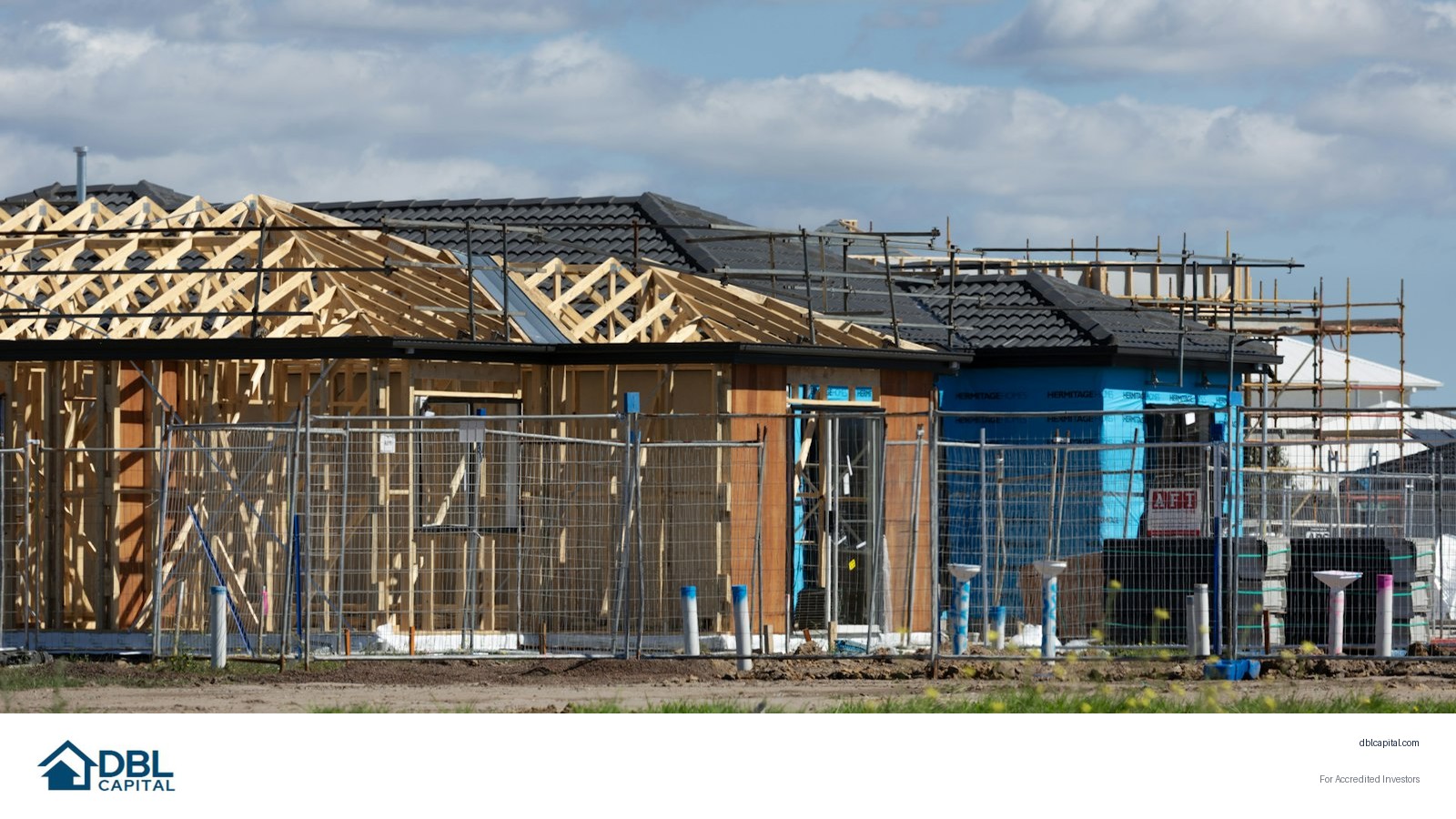
This is also why DBL Capital's build-to-core approach in Southwest Florida's starter-home segment leans on new construction rather than acquiring existing stock at compressed cap rates: building directly into a rent-to-income gap, rather than bidding against other buyers for a shrinking supply of affordable units, is what keeps the underwriting durable across a full cycle rather than just the current quarter.
What this means for a diversified, passive allocation
For an accredited investor allocating capital across a portfolio rather than chasing a single deal, the practical takeaway isn't "workforce housing always wins." It's that workforce and luxury multifamily respond to oversupply differently, and a fund structured around the former isn't exposed to the concession-driven cash-flow drag that hits the latter during a supply-heavy stretch of the cycle. That's a structural characteristic of the asset class, not a prediction about where rents go next — and it's the kind of distinction that's easy to miss when the only thing being compared is a rent survey instead of the income statement behind it.
If you want to see how this plays into the current portfolio — including the underwriting assumptions behind each workforce-housing position — the clearest way is a direct conversation with the investment team.


