
Why Workforce Housing Isn't Getting Built: The Construction-Cost Math Squeezing Starter Homes in Southwest Florida
Southwest Florida needs homes that working households can afford to purchase. Delivering those homes at a price that also supports the cost of development is the challenge.
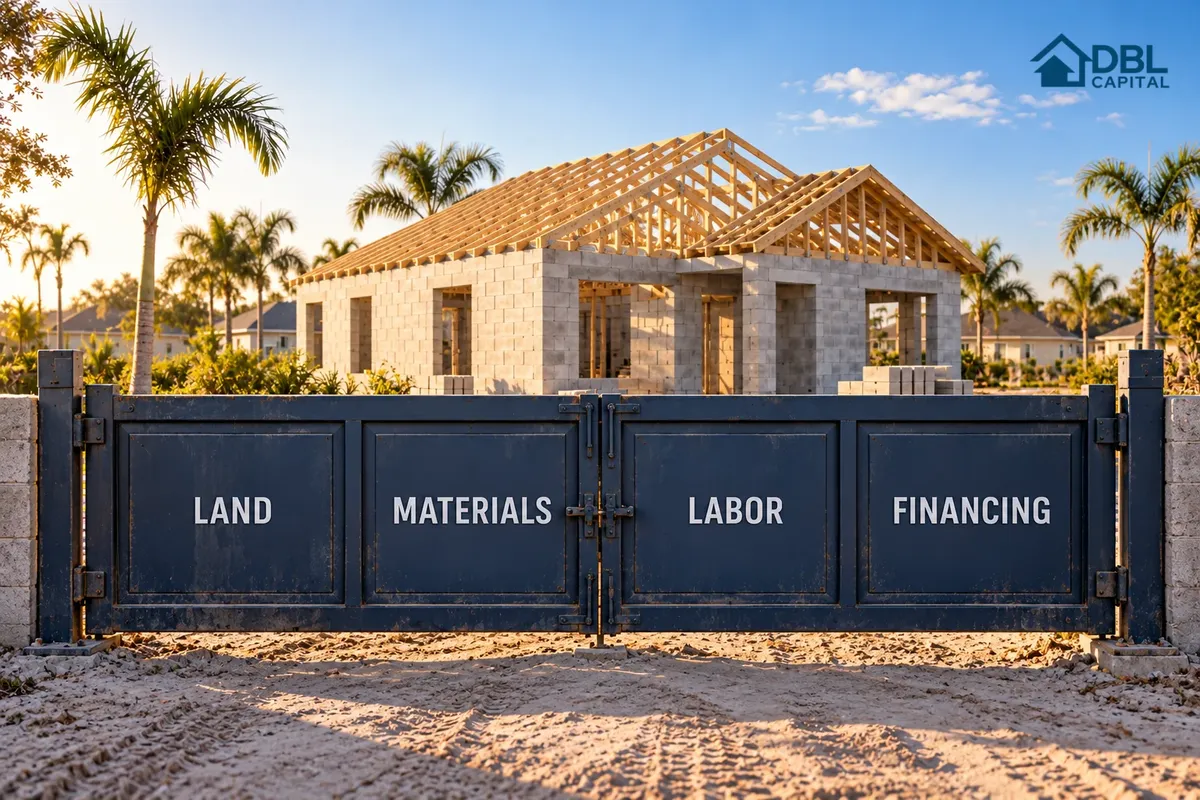
Workforce housing is being built, but the economics can limit which projects move forward. Land, site preparation, materials, labor and financing all have to fit within a selling price the intended buyer can support.
That challenge helps explain DBL Capital’s approach. Through an integrated platform spanning land acquisition, construction and homebuyer financing, the team can evaluate the full equation, from the cost of a lot to the buyer’s ability to close. The objective is to identify projects that support both an attainable home and a viable investment.
Why Smaller Homes Still Carry Substantial Costs
Building a smaller home can reduce expenses, but it does not shrink every budget line proportionately.
A modest home still requires land, site preparation, utility connections, permits and essential building systems. Kitchens and bathrooms remain significant expenses even when the overall floor plan gets smaller.
These costs create pressure at the entry level. The buyer’s budget limits the selling price, while the project’s total development cost establishes how low that price can realistically go.
Builders can respond with simpler designs, smaller lots or different locations. Each decision involves tradeoffs. Less expensive land, for example, may require additional site work that offsets the initial savings.
The challenge is finding the right combination of land, design and execution before committing capital.
Affordability Extends Beyond the Selling Price
For a working household, affordability ultimately comes down to the monthly payment and the cash needed to complete the purchase.
Mortgage rates, insurance, property taxes and closing costs all influence whether a buyer can move forward. A home can meet its construction budget and still take longer to sell if the total cost of ownership exceeds what buyers can support.
That matters to investors because time carries a cost. Delays between completion and closing can increase financing and other holding expenses, reducing the margin available on a project.
A workforce housing strategy therefore needs to account for both sides of the transaction: what it costs to deliver the home and what it takes for the buyer to purchase it.
How DBL Capital Approaches the Math
DBL Capital brings land acquisition, construction and homebuyer financing together through its related operating companies.
That coordination allows the team to consider how decisions at one stage affect the next. A lot’s purchase price must be evaluated alongside site conditions and construction requirements. The home’s design must work within the project budget and intended selling price. Financing options must account for the buyer’s ability to complete the purchase.
Where appropriate, tools such as mortgage rate buydowns and closing cost incentives can help address buyer affordability. Those tools also have a cost, which must be included in the project economics.
An integrated platform does not make every project workable. It provides more opportunities to coordinate costs, construction and the path to closing. The investment discipline lies in selecting projects where those elements fit together.
What This Means for Investors
The need for attainable homes provides a reason to examine the market. The ability to deliver them at a viable total cost determines the investment opportunity.
For accredited investors, DBL Capital offers participation in that development process through a professionally managed portfolio. The team handles the work of identifying land, coordinating construction, managing capital and moving completed homes toward sale.
The investment thesis depends on translating housing need into projects that work for both the buyer and the fund. That requires disciplined acquisition, cost management and execution from the first land decision through the final closing.
To learn how DBL Capital approaches workforce housing development in Southwest Florida and whether the fund aligns with your investment goals, schedule a conversation with our team.


