
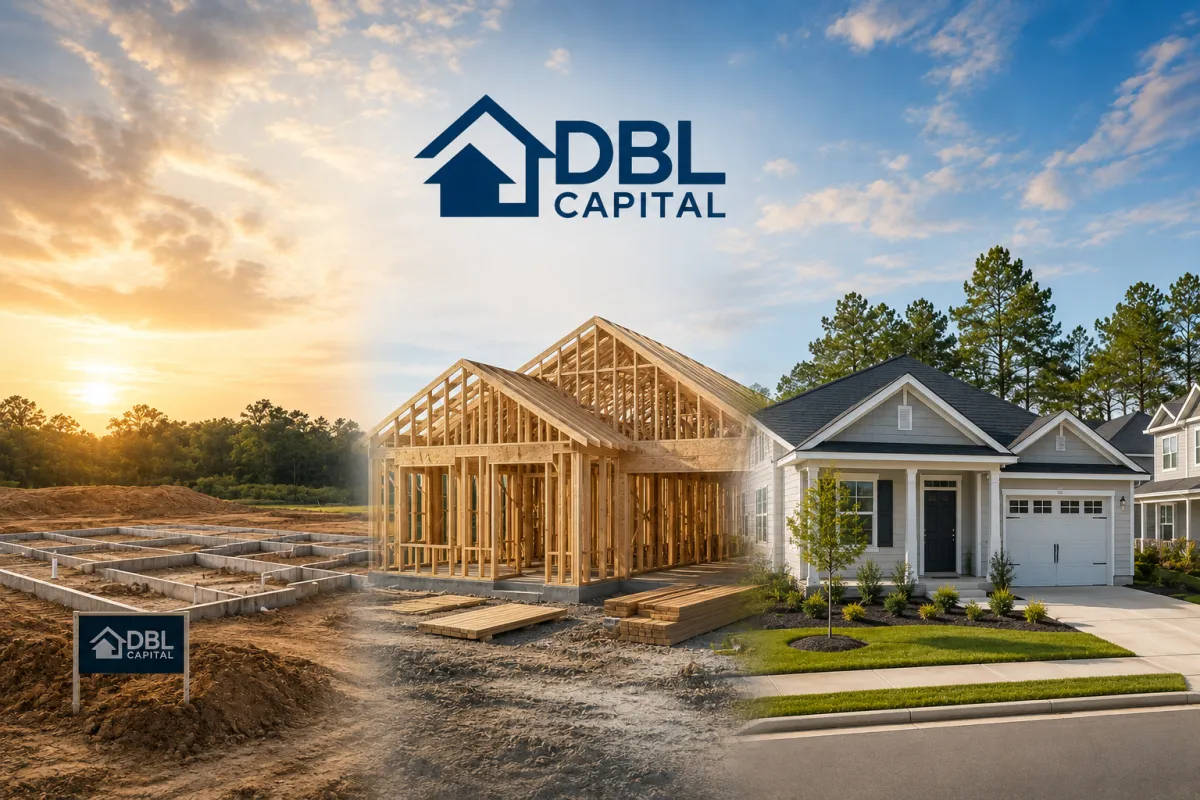
Forced Appreciation: Creating Value Instead of Waiting for the Market
Every dollar of value in a real estate investment comes from one of two places: something you did to create it, or something the market decided about it. The first is built. The second is a wave.
A meaningful share of real estate returns over the last decade came from riding that market wave. Financing was inexpensive, values rose, and favorable market conditions carried investors alongside good execution. Then rates moved, financing became more expensive, and investors were reminded that a wave that carries you can also pull back out from under you.
Forced appreciation is the other path. It is value created through execution rather than waiting for the market to make an asset more valuable.
For a workforce housing strategy focused on building new attainable homes, that difference is not academic. It is central to the thesis.
The Math, in Numbers You Can Check
For a workforce housing developer, forced appreciation starts with acquiring land at the right basis and continuing through planning, financing, construction, cost management, and delivery. The objective is simple: create a finished asset for less than the value of what you ultimately deliver.
Consider a simplified example. A fund acquires land and develops a new workforce home at a total basis of $300,000. Once completed, comparable new homes in that market support a value of $350,000.
That's $50,000 of value created through execution—not because the market appreciated, but because the operator delivered the finished asset below its market value.
Now let the market move against you.
If comparable values soften from $350,000 to $330,000, the economics are less favorable, but there is still a $30,000 spread above the $300,000 development basis. Forced appreciation doesn't eliminate market risk. It can create a cushion against it.
Construction costs can rise. Schedules can slip. Financing can become more expensive. Completed values can fall. But creating value between development basis and completed value puts an investment in a materially different position from one that needs market appreciation to make the economics work.
The same dynamic shows up when you compare operators directly. Imagine two operators each deliver a comparable home worth $350,000. One has a total development basis of $340,000. The other delivers it for $300,000. The market value is identical. The economics are not.
This isn't a theoretical exercise. It reflects the basis-to-value discipline DBL applies to every home in its development pipeline in Southwest Florida—the same underwriting standard on each project: land acquired at a basis that supports a target spread, costs controlled through construction, and value delivered at completion.
The market ultimately determines what the finished asset is worth. The operator has much more influence over what it costs to create it.
Why Workforce Housing Is Where This Actually Works
Forced appreciation through development requires two things: the ability to create housing at an attractive basis, and durable demand for the finished product. Workforce housing brings both.
The demand comes from households that regional economies depend on—nurses, teachers, tradespeople, first responders, service and logistics workers, and other working families who need attainable housing near the communities where they work. In growing markets where population and employment have outpaced the supply of attainable homes, that imbalance creates an opportunity to add housing where it's needed—instead of buying an underperforming property and improving what it earns, the operator can add new supply and create the asset from the ground up.
That puts the quality of execution—not simply the direction of the housing market—at the center of the strategy.
What Forcing Value Looks Like Inside a Fund
For DBL Capital, forced appreciation is not primarily a renovation story. The strategy centers on building new starter homes in Southwest Florida, applying the same value-creation principle one step earlier in the life of the asset.
When the fund develops a home, it is creating an asset where one did not previously exist. The value on completion isn't simply what DBL paid for an existing home plus whatever appreciation the market provided—it reflects the value of a newly constructed home against a basis established through land acquisition, development, and construction. The spread between those two numbers is where forced appreciation can occur, and it is produced through execution: site control, cost management, financing, construction, and delivery.
New construction also means the fund isn't starting with decades of deferred maintenance. New roofs, mechanical systems, building components, and current construction standards can reduce some of the uncertainty associated with older housing stock. In Florida, current wind-mitigation standards can also matter to the long-term economics of owning housing.
And critically, market appreciation doesn't have to be the engine of the thesis—market conditions will still affect value, but they aren't what the strategy is betting on.
What This Means for the Capital You Allocate
For an accredited investor, the practical translation is straightforward: inside a professionally managed fund, investors can participate in a development strategy across a portfolio of workforce housing projects without having to acquire land, oversee construction, arrange financing, or build the operating infrastructure themselves.
That's where professional management becomes particularly valuable. Development requires capabilities across land acquisition, financing, construction, project management, and long-term real estate operations. The investment thesis only works if the operator can translate demand for workforce housing into economically viable homes.
For DBL Capital, that comes back to a tangible idea: create housing people need while creating value through disciplined execution.
The goal isn't to predict what the market will give you. It's to create value before you need the market's help.
If you're an accredited investor interested in understanding how DBL Capital approaches development basis, construction, and value creation within its workforce housing strategy, we'd be happy to have a conversation about the fund and whether it aligns with your broader investment goals.
Schedule a conversation with the DBL Capital team:https://dblcapital.com/investor/call
DBL Capital's fund is available to accredited investors under Regulation D.


