
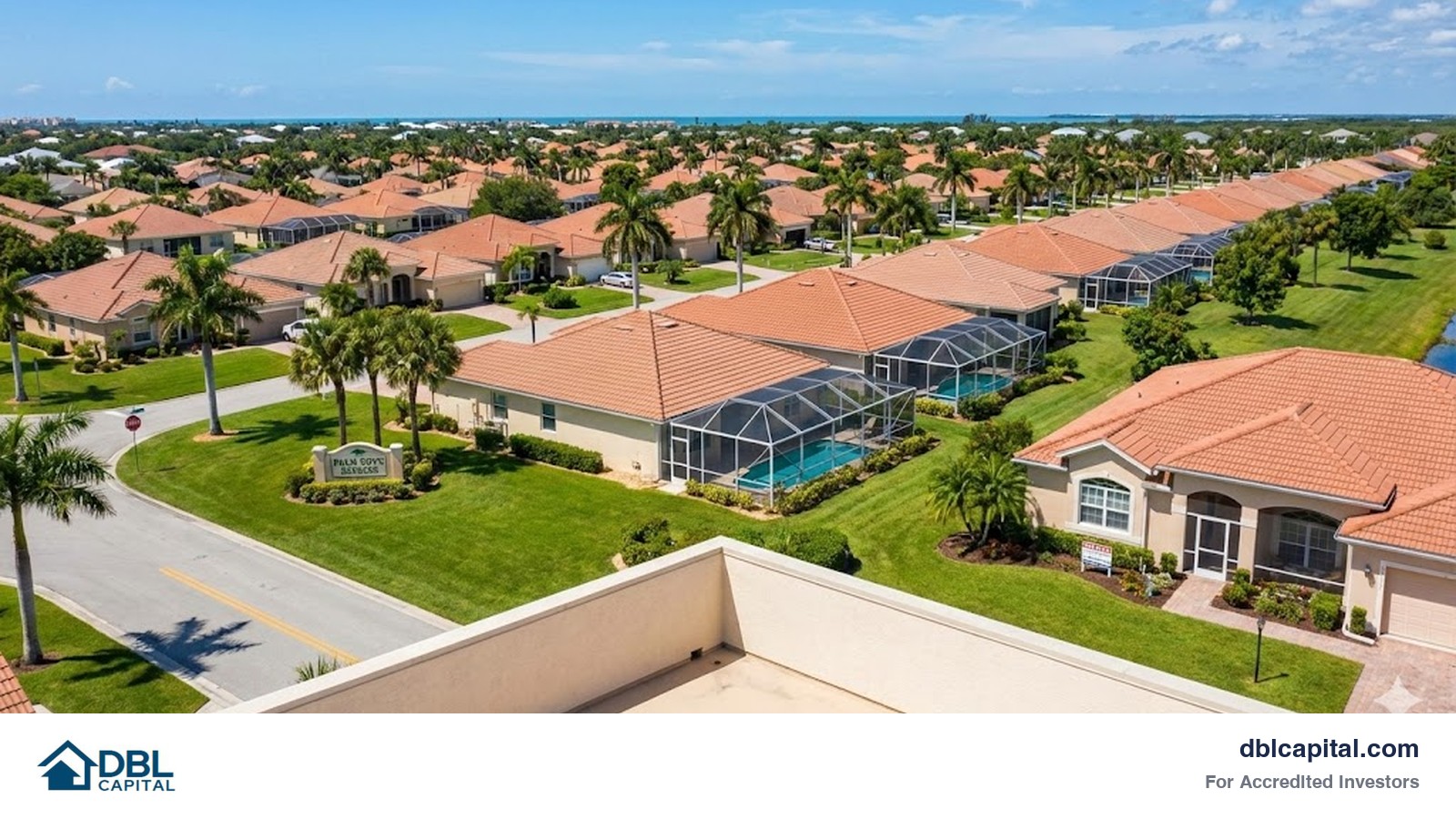
Single-Family Rentals: Pros and Cons for Passive Investors
Single-family rentals (SFR) have quietly become one of the most institutionally validated asset classes in private real estate. What was once the domain of individual landlords with a few doors has attracted billions in institutional capital over the past decade — and for good reason. But like every asset class, the case for SFR as a passive LP investment comes with important caveats.
Why SFR has earned a seat at the table
The demand story is straightforward. Homeownership affordability in the U.S. has hit generational lows. Mortgage rates, elevated home prices, and tighter lending standards have pushed millions of would-be buyers into the rental market — many of them permanently. These aren't distressed renters. They're dual-income households, families, and professionals who simply can't or won't buy at current valuations. They stay longer, pay on time, and treat the property like their own.
That tenant profile translates directly into LP-friendly metrics: lower turnover, lower vacancy, and more stable cash flow than many multifamily counterparts.
SFR also benefits from a structural supply constraint. You can't build a new subdivision overnight. Permitting, land costs, and labor shortages all act as natural barriers to new supply — which supports long-term rent growth in undersupplied markets.
From a portfolio perspective, SFR offers geographic diversification at scale. A well-managed SFR fund might own homes across 10–15 markets, insulating investors from any single metro's softness.
The cons — and they're real
SFR is operationally intensive in a way that multifamily is not. A 200-unit apartment building has one roof, one HVAC system, one management team on-site. Two hundred single-family homes have two hundred roofs, two hundred HVAC systems, and tenants spread across dozens of zip codes. The logistics of maintenance, leasing, and property management at scale are genuinely harder — and the quality of the operator matters enormously.
Margins are also thinner per door. The economics of SFR don't benefit from the same density efficiencies as multifamily. Expense ratios can run higher, and a single vacancy on a single-family home hits harder proportionally than one empty unit in a 100-door apartment complex.
Appreciation is also less predictable. SFR values are heavily tied to local for-sale housing markets — which means they can be more sensitive to interest rate movements than commercial assets priced on cap rates. When mortgage rates rise, SFR values can compress even as rents hold steady.
Finally, the institutional SFR space is still maturing. Underwriting standards, exit strategies, and fund structures vary widely. Not all SFR fund managers have been tested across a full cycle.
What to look for as a Limited Partner (LP)
The best funds combine technology-driven property management (to solve the operational complexity) with disciplined market selection — focusing on Sun Belt and Midwest metros with strong job growth, population inflow, and housing affordability gaps. Operators who have built proprietary management platforms or partnered with scaled regional managers have a meaningful edge.
Ask any SFR fund manager: what is your average days-to-lease, your renewal rate, and your all-in expense ratio per door? Those three numbers tell you more about execution quality than any projected IRR slide.
If you're evaluating this asset as part of your passive portfolio and want to understand how DBL Capital approaches workforce housing as an asset class, we'd welcome the conversation.
[ Book a call with our investor team ]
The bottom line: SFR offers a compelling demand story, a durable tenant base, and natural supply constraints — but it rewards operators who have solved the management complexity. As a passive LP, your job is to find the ones who have. The asset class is sound; the operator is the variable. If you want to see how DBL Capital underwrites workforce housing, let's talk.


